TIG Al vs MIG Al Welding: Differences, Pros, and Cons Explained.
- Share
- Issue Time
- Nov 12,2026
Summary
Welding aluminum presents unique challenges due to its distinct properties, including high thermal conductivity, a relatively low melting point, and the rapid formation of a tenacious, high-melting-point oxide layer. These characteristics necessitate specialized techniques and equipment compared to welding steel. The two primary methods for welding aluminum are TIG (Tungsten Inert Gas) and MIG (Metal Inert Gas), each suited for different applications based on project requirements.
TIG welding,

Aluminum is a fantastic metal, a cornerstone of modern industry seen everywhere from cars to airplanes, prized for its remarkable strength-to-weight ratio. But when it comes to joining this versatile material, welding aluminum is a different ballgame compared to welding steel. It demands special techniques, tools, and a deep understanding of its unique properties.
Today, we delve into the two primary methods for welding aluminum: TIG (Tungsten Inert Gas) and MIG (Metal Inert Gas). We will provide a detailed comparison to unpack the essential differences between TIG Al vs MIG Al welding, helping you understand which process is the right choice for your specific project.
Key Takeaways
- Core Challenge: Welding aluminum is difficult due to its high thermal conductivity, low melting point, and the formation of a tough, high-melting-point oxide layer that must be cleaned before and during welding.
- TIG Welding (GTAW): Known for precision and aesthetics. It uses a non-consumable tungsten electrode and a separate filler rod, offering the welder maximum control. It's the preferred method for thin materials and applications where appearance is critical, such as in aerospace or custom automotive fabrication. However, it is a much slower process that requires a high level of operator skill.
- MIG Welding (GMAW): Valued for speed and efficiency. It uses a continuously fed wire electrode that also acts as the filler material, making it a faster process ideal for thicker materials and long production runs. While easier to learn than TIG, it offers less control over the weld bead's appearance.
- Choosing the Right Process: The decision between TIG and MIG depends on the project's priorities. For high-quality, precise, and beautiful welds on thinner materials, choose TIG. For fast, efficient welding on thicker sections where speed is more important than appearance, MIG is the better option.
- Equipment Specifics: Both processes require 100% Argon for shielding gas. TIG welding aluminum requires an AC (Alternating Current) power source to clean the oxide layer. MIG welding aluminum often requires specialized equipment like a spool gun or a push-pull gun to prevent the soft aluminum wire from kinking or jamming.
Why Welding Aluminum is Tricky: The Basis for TIG Al vs MIG Al Choices
Before comparing TIG and MIG processes, it's crucial to understand why aluminum is a more demanding material to weld than steel. Its fundamental properties create unique challenges that directly influence the choice of welding method and equipment.
Aluminum's Special Traits
Aluminum is prized for its high strength-to-weight ratio and natural resistance to corrosion. These characteristics make it essential in industries like aerospace, automotive, and marine construction. However, the very properties that make it so useful also make it difficult to weld. Unlike steel, which provides clear visual cues and has a more forgiving nature under heat, aluminum requires a specialized approach.
Melts Low, Spreads Heat Fast
Aluminum's thermal conductivity is about six times higher than that of steel. This means heat dissipates from the welding zone very quickly, making it difficult to establish and maintain a molten weld puddle. Welders must use a much higher initial heat input to start the weld. As the workpiece heats up, this same conductivity can cause the weld pool to expand suddenly, increasing the risk of burn-through, especially on thin materials.
Furthermore, aluminum melts at a relatively low temperature of about 1,220°F (660°C), compared to steel's 2,500°F (1370°C). Complicating matters, aluminum does not change color as it heats up. It stays silver right up to the point of collapse, giving the welder no visual warning that it's about to turn into a molten hole.
The Tough Top Layer
Perhaps the single biggest challenge in aluminum welding is its oxide layer (Al₂O₃). When exposed to air, aluminum instantly forms a thin, tough, and transparent layer of aluminum oxide. This layer has a melting point of approximately 3,700°F (2,037°C), more than three times higher than the aluminum itself.
If you try to weld without first removing or breaking through this oxide layer, you will melt the base metal long before the oxide skin melts. The solid oxide particles can then fall into the liquid weld pool, leading to defects like porosity, lack of fusion, and a weak, brittle weld. This is why pre-weld cleaning with a dedicated stainless steel brush and the use of AC for TIG welding are critical.
Bending and Breaking Worries
Aluminum is susceptible to several types of defects during and after welding.
- Hot Cracking: Some aluminum alloys are prone to cracking as the weld solidifies. This happens because of aluminum's high rate of thermal expansion and the significant shrinkage that occurs upon cooling. Using the correct filler metal is essential to prevent these cracks.
- Porosity: Molten aluminum readily absorbs hydrogen, which can come from moisture in the air or contaminants on the metal's surface. As the aluminum cools and solidifies, this trapped hydrogen is released, forming tiny gas pockets or pores in the weld. Porosity significantly weakens the weld joint.
- Distortion: Due to its high thermal expansion and conductivity, aluminum is prone to warping and distortion during the welding process. Careful heat management and proper clamping are necessary to minimize these effects.

Getting to Know TIG Al Welding: For Best Control and Look
TIG welding, also known as Gas Tungsten Arc Welding (GTAW), is the go-to process when precision, control, and appearance are the top priorities. It's often compared to oxy-acetylene welding in technique but uses an electric arc instead of a flame. Renowned for producing exceptionally clean and high-quality welds, TIG is a favored method in critical industries like aerospace and custom automotive fabrication.
How TIG Welding for Aluminum Works
The TIG process involves creating an electric arc between a non-consumable tungsten electrode and the aluminum workpiece. This arc melts the base metal to create a weld puddle. To protect this molten puddle from contamination by the surrounding atmosphere, an inert shielding gas—almost always pure argon for aluminum—flows through the torch and covers the weld zone.
A key aspect of TIG welding is the two-handed technique. One hand holds the TIG torch to manage the arc and the weld puddle, while the other hand manually feeds a separate filler rod into the puddle as needed. This separation of heat source and filler material gives the welder ultimate control over the entire process.
Crucially, welding aluminum requires a TIG machine with Alternating Current (AC) capability. The AC cycle is essential for dealing with aluminum's tough oxide layer.
- Electrode Positive (EP) Cycle: This part of the cycle acts like a scrubbing brush, breaking apart the aluminum oxide on the surface. This is known as the "cleaning action."
- Electrode Negative (EN) Cycle: This portion directs the majority of the heat into the workpiece, ensuring deep penetration and a strong weld.
Modern TIG welders allow the operator to adjust the AC balance, controlling the ratio of cleaning to penetration for optimal results on different thicknesses and surface conditions.

The Good Parts of TIG Al
- Superior Control and Precision: The use of a foot pedal to control amperage and the manual addition of filler metal gives the welder unmatched control over heat input and weld bead formation. This makes TIG ideal for intricate and delicate work.
- High-Quality, Aesthetic Welds: TIG welding is known for producing clean, spatter-free welds with a distinct "stack of dimes" appearance that is highly sought after for cosmetic parts. Minimal post-weld cleanup is required.
- Excellent for Thin Materials: The fine control over heat input makes TIG the perfect choice for welding thin-gauge aluminum without the risk of burn-through or warping.
- Versatility: While it excels on thin materials, TIG can be used to weld a wide range of aluminum alloys and thicknesses.
The Not-So-Good Parts of TIG Al
- Slow Process: The meticulous nature of TIG welding and its lower deposition rate makes it significantly slower than MIG welding. It is not ideal for large-scale production where speed is a priority.
- High Skill Requirement: TIG welding has a steep learning curve. The two-handed coordination and the need to manage amperage with a foot pedal require considerable practice and skill to master.
- Sensitivity to Cleanliness: The process is highly sensitive to contaminants. The base metal must be impeccably clean—free of oil, dirt, and oxides—to prevent weld defects like porosity.
- Higher Equipment Cost: AC/DC TIG welding machines are generally more expensive than their MIG counterparts.
When We Pick TIG Al
TIG welding is the clear choice for projects where quality and appearance are non-negotiable. Its precision makes it indispensable in fields such as:
- Aerospace: For welding critical components like fuel tanks and fuselage sections where weld integrity is paramount.
- Automotive: In high-performance and custom vehicle fabrication, from chassis components to intake manifolds.
- Artistic and Architectural Fabrication: For creating visually appealing sculptures and structures where the look of the weld is part of the design.
- Thin Sheet Metal Work: Any application involving thin aluminum sheets that require precise heat control to avoid distortion.
Getting to Know MIG Al Welding: For Speed and Big Jobs
When speed and efficiency are the driving forces behind a project, MIG (Metal Inert Gas) welding is the champion. Also known as Gas Metal Arc Welding (GMAW), this process is significantly faster than TIG and has a much shallower learning curve, making it a popular choice in production environments and for thicker aluminum sections.
How MIG Welding for Aluminum Works
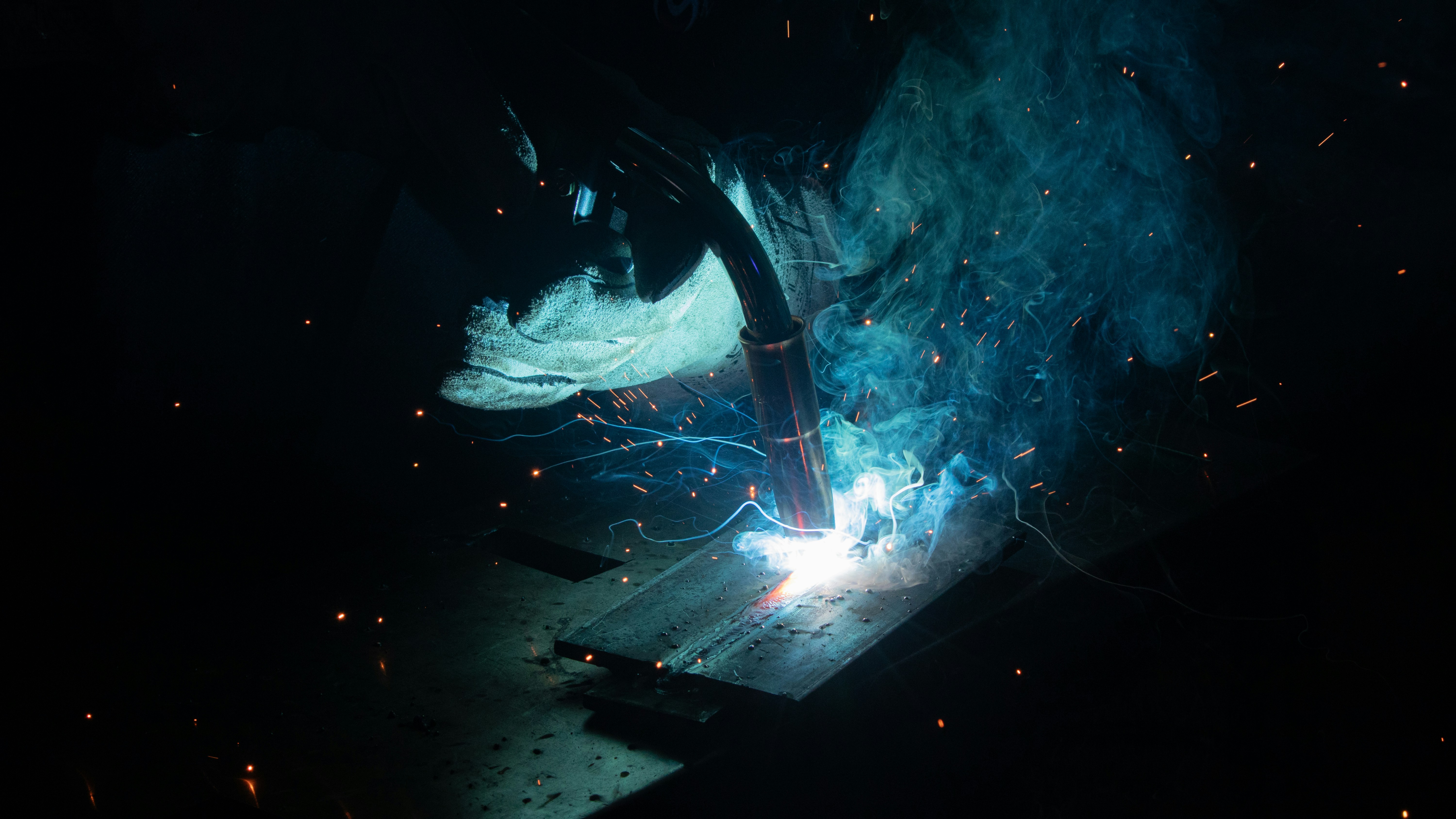
MIG welding is a semi-automatic process that uses a consumable wire electrode, which is continuously fed through a welding gun at a preset speed. When the welder pulls the trigger, the wire feeds out, an electric arc is created between the wire and the workpiece, and the wire melts to become the filler metal. At the same time, an inert shielding gas (100% pure argon is the standard for aluminum) flows from the gun to protect the weld puddle from atmospheric contamination.
Because the soft aluminum wire is prone to kinking and tangling (an issue known as "birdnesting"), a standard MIG setup used for steel is not suitable. Aluminum MIG welding requires special equipment:
- Spool Gun: A small, self-contained unit that holds a 1-lb spool of aluminum wire directly on the gun. This drastically shortens the avel distance for the wire, ensuring smooth and reliable feeding.
- Push-Pull Gun: A more advanced system for production work that uses a motor in the gun to pull the wire while the main feeder pushes it. This synchronized system allows for longer torch cables and consistent wire feeding over greater distances.
Unlike TIG, MIG welding on aluminum uses Direct Current Electrode Positive (DCEP) polarity. The process relies on the force of the spray transfer arc and pre-weld cleaning to manage the oxide layer, as it does not have the built-in cleaning action of AC TIG.
The Good Parts of MIG Al
- High Speed and Productivity: The continuous wire feed makes MIG welding much faster than TIG, with higher deposition rates. This makes it ideal for long welds and large-scale manufacturing.
- Easier to Learn: Often described as a "point-and-shoot" process, MIG welding is significantly easier for beginners to pick up compared to the complex two-handed technique of TIG.
- Excellent for Thick Materials: The high heat and deposition rates of MIG welding make it highly effective for joining thick sections of aluminum (generally 1/8" and above) efficiently.
- Cost-Effective for Production: The combination of speed and lower labor skill requirements can make MIG a more economical choice for high-volume work.
The Not-So-Good Parts of MIG Al
- Less Control and Precision: The semi-automatic nature of MIG provides less control over the weld puddle compared to TIG, making it less suitable for delicate or intricate work.
- Weld Appearance: While a skilled operator can produce a decent-looking MIG weld, it generally lacks the clean, aesthetic "stack of dimes" finish of a TIG weld. Welds may have more spatter.
- Risk of Wire Feeding Issues: Despite spool guns and push-pull systems, soft aluminum wire can still be problematic and lead to downtime if not set up correctly.
- Burn-Through on Thin Materials: The high heat input of the MIG process makes it difficult to use on thin aluminum without causing warping or burning through the material.
When We Pick MIG Al
MIG welding is the preferred method when the project prioritizes speed, efficiency, and throughput over aesthetic perfection. It excels in applications such as:
- Manufacturing and Fabrication: For producing structural components, frames, and trailers where long, continuous welds are common.
- Marine Industry: Building boat hulls and other large aluminum structures.
- Automotive Production: In automated or semi-automated lines for welding thicker chassis and structural parts.
- General Repair: For quick and strong repairs on thicker aluminum items.
TIG Al vs MIG Al: A Close Look at the Differences
Choosing between TIG and MIG for aluminum welding comes down to a trade-off between speed and quality. While both processes can create strong, reliable welds, they excel in different areas and are suited for different applications and operator skill levels. Here’s a head-to-head comparison of the key factors.
Weld Quality and Look
When it comes to aesthetic perfection, TIG welding is the undisputed winner. The precise heat control, manual filler metal addition, and the cleaning action of the AC current work together to produce exceptionally clean, smooth, and visually appealing welds. The classic "stack of dimes" ripple effect is a hallmark of a skilled TIG welder and is often desired for products where the weld is visible.
MIG welding, while functional, produces a less refined bead. The process is prone to more spatter, and the resulting weld, while strong, does not have the same level of cosmetic appeal. For parts that will be painted, powder-coated, or hidden from view, a MIG weld is perfectly acceptable.
Winner: TIG
Speed of Work
This is where MIG welding shines. The continuous wire feed system makes it a much faster and more productive process than TIG. For projects with long, continuous seams or high-volume production runs, MIG welding can deposit metal significantly faster, reducing labor time and cost. TIG welding is a slow, methodical process that prioritizes precision over speed, making it inefficient for large-scale jobs.
Winner: MIG
Skill Needed
MIG welding is widely considered easier to learn. The one-handed "point-and-shoot" operation is relatively simple, and a beginner can be producing acceptable welds in a short amount of time.
TIG welding, on the other hand, has a very steep learning curve. It requires excellent hand-eye coordination to manage the torch in one hand, the filler rod in the other, and often a foot pedal to control the amperage simultaneously. Mastering TIG welding takes significant practice and is a more difficult skill to acquire.
Winner: MIG
Best for Thickness
The choice of process is heavily influenced by the thickness of the aluminum.
- TIG welding excels on thin materials (generally under 1/8" or 3mm). Its precise heat control minimizes the risk of warping or burning through the delicate metal.
- MIG welding is the preferred method for thicker materials (1/8" or 3mm and up). The higher heat input and faster deposition rates allow it to efficiently fill larger joints and achieve deep penetration on thick plates. While pulsed MIG can be used on thinner materials, TIG generally offers more control and better results.
Winner: TIG for thin materials, MIG for thick materials.
TIG Al vs. MIG Al: Comparison Table
| Feature | TIG (GTAW) Welding | MIG (GMAW) Welding |
|---|---|---|
| Weld Quality | Excellent. Clean, precise, and highly aesthetic "stack of dimes" appearance. | Good. Functional and strong, but less visually appealing and more spatter. |
| Welding Speed | Slow. A meticulous process with low deposition rates. | Fast. High deposition rates suitable for production. |
| Skill Level | High. Steep learning curve requiring two-handed coordination. | Low to Medium. Easier to learn; "point-and-shoot" operation. |
| Material Thickness | Best for thin materials (e.g., < 1/8" or 3mm). | Best for thick materials (e.g., > 1/8" or 3mm). |
| Heat Control | Excellent. Foot pedal allows for precise amperage adjustment. | Good. Less precise control, higher risk of burn-through on thin sections. |
| Equipment Cost | Higher. AC/DC TIG machines are generally more expensive. | Lower to Medium. Basic MIG setups are more affordable. |
| Best For… | Aerospace, custom auto, art, thin sheet, visible welds. | Manufacturing, structural frames, marine, thick plate, long welds. |
Choosing Your Method: When to Use TIG Al vs MIG Al
By understanding the strengths and weaknesses of each process, you can confidently select the best method for your specific aluminum project. The choice isn't about which process is "better" overall, but which is the right tool for the job at hand.
Match the Method to Your Project
There is no single correct answer for every situation. The optimal choice depends entirely on the priorities of your project. Ask yourself these key questions:
- What is the material thickness? This is often the first and most important consideration. For thin sheets (less than 1/8" or 3mm), TIG is almost always the better choice to prevent burn-through and distortion. For thicker plates, MIG will provide the necessary power and speed.
- Is weld appearance important? If the weld will be visible on the final product and aesthetics are a priority, TIG is the way to go. Its clean, precise bead is unmatched. If the part will be painted or the weld is hidden, MIG's speed may be more valuable.
- What is the project volume and-scale? For large-scale production with many repetitive welds or long seams, MIG's superior speed makes it the far more economical and efficient choice. For one-off custom parts, repairs, or intricate designs, the slower, more deliberate TIG process is ideal.
- What is the skill level of the operator? TIG welding requires a highly skilled and experienced operator. If your workforce is less experienced, the easier-to-learn MIG process may be a more practical option.
Many fabrication shops use a hybrid approach. They might use MIG for long, structural seams and then switch to TIG for detailed corner work, thin attachments, or visible joints on the same project.
Why Certified Welding Matters
Regardless of whether you choose TIG or MIG, for any project where structural integrity and safety are important, hiring a certified welder is crucial. Certifications, such as those from the American Welding Society (AWS), are not just a piece of paper; they are proof that a welder has demonstrated the ability to produce sound, high-quality welds according to established industry standards.
Welding aluminum is particularly challenging, and an uncertified or inexperienced welder can easily create a joint that looks acceptable on the surface but is weak and full of internal defects. A certified welder understands the specific procedures for preparing and welding aluminum, including heat control, oxide removal, and filler metal selection, to ensure the final product is both safe and durable. For any critical application—from structural frames to pressure vessels—working with a certified professional mitigates risk and guarantees a higher standard of quality.
Conclusion
Knowing the differences between TIG and MIG welding is key to finding success with any aluminum project. Each method has distinct advantages and disadvantages that make it the right choice for different jobs. TIG welding offers unparalleled precision and a beautiful finish, making it perfect for thin materials and cosmetic applications where quality is paramount. MIG welding brings speed and efficiency, excelling at thicker materials and high-volume production where productivity is the main goal.
By carefully considering the thickness of the metal, the desired appearance of the weld, and the overall scope of the job, you can confidently choose the best welding method for your aluminum fabrication needs.
We hope this guide has clarified the TIG Al vs MIG Al debate for you. Have you found one method to be more effective for your specific projects? Share your experiences in the comments below, and don't forget to share this article with colleagues who might find it useful!
Frequently Asked Questions (FAQ)
1. Which process is ultimately stronger for aluminum, TIG or MIG? Neither process is inherently "stronger" than the other. When performed correctly by a skilled operator with the proper equipment and settings, both TIG and MIG welding can produce welds that meet or exceed the strength requirements of the base aluminum. The strength of the final weld depends on factors like proper penetration, lack of defects (like porosity or cracking), and correct filler metal selection, not the process itself.
2. Can you TIG weld aluminum with a DC (Direct Current) machine? While AC (Alternating Current) is the industry standard for TIG welding aluminum, it is technically possible to weld it using DC in specific situations. This typically requires using pure helium as a shielding gas and is generally reserved for very thick aluminum (over 1/4 inch). The DC process provides deep penetration but lacks the cleaning action of AC, which is needed to break up the aluminum oxide layer. As a result, the weld may not be as clean and is not suitable for thin materials or applications where appearance is critical. For most applications, an AC-capable machine is essential for quality aluminum TIG welding.
3. What shielding gas is required for welding aluminum? For both TIG and MIG welding aluminum, 100% pure argon is the standard and most common shielding gas. It provides excellent arc stability and a clean welding environment. For MIG welding steel, a mix of argon and carbon dioxide (like C25) is often used, but this mix must not be used for aluminum, as the CO2 will react with the molten aluminum and cause severe porosity and a weak, brittle weld. For very thick sections, a blend of argon and helium can be used to increase heat input and penetration.
4. Is a spool gun absolutely necessary for MIG welding aluminum? While not strictly "necessary" in all cases, using a spool gun (or a push-pull gun) is highly recommended and considered standard practice for MIG welding aluminum. The aluminum wire is very soft and prone to kinking and jamming ("birdnesting") in a standard MIG gun's long liner. A spool gun minimizes the wire travel distance to just a few inches, which dramatically improves feedability and reduces frustration. For very short and straight torch setups on thick material, some welders have success using a regular MIG gun with a Teflon liner and U-groove drive rolls, but for reliable and consistent results, a spool gun is the proper tool for the job.